 Last additions - Dry clutch change Last additions - Dry clutch change |
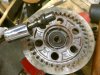
514 viewsThe end result, push rod out.Aug 05, 2013
|
|
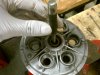
515 viewsUse a drift to tap out the push rod.Aug 05, 2013
|
|
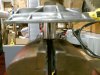
500 viewsHow it looks using a vice. The push rod is free to move as the socket is resting on the vice clamps.Aug 05, 2013
|
|
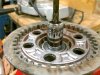
505 viewsI used a 5/8" socket to support the bearing so I could drive out the push rod.Aug 05, 2013
|
|
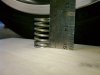
541 viewsThe springs should be no less than 41mm. Mine were at 36mm!Aug 05, 2013
|
|
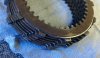
525 viewsAnother view of the same worn teeth.Aug 05, 2013
|
|
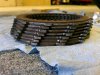
496 viewsThe clutch stack. See how the left edge of the friction plate teeth are worn and hammered.Aug 05, 2013
|
|
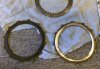
457 viewsThese are the inner-most plates. Only slightly less wear than the fronts.Aug 05, 2013
|
|
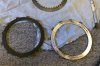
502 viewsThis is the outer-most friction plate and driven plate. The average thickness of the friction plates was ~2.8mm. They should be replaced if they are less than 3.2mm!Aug 05, 2013
|
|
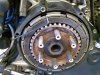
513 viewsI placed a friction plate back in to measure the gap. I had to use an Allen wrench: 2.5mm. Not good. Max gap is supposed to be no more than 0.6mm!Aug 05, 2013
|
|

530 viewsClutch pack removed. See all those teeth marks? Yeah, that's how a clutch basket SHOULDN'T look! Very worn out.Aug 05, 2013
|
|
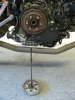
513 viewsUnscrew the bolts and remove the spring caps and springs. The pressure plate then pulls straight out and the push rod comes with it.Aug 05, 2013
|
|
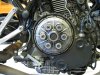
599 viewsThe original OEM clutch.Aug 05, 2013
|
|
|
|
|
|
|




