 Last additions Last additions |
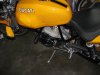
740 viewsThe nice thing with the titanium "colored" Oberon is that its coloration is close to that of the stock unit and thus doesn't stand out.Jan 30, 2011
|
|
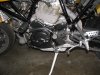
765 viewsInstalled, bled, and ready for use!Jan 30, 2011
|
|
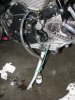
768 viewsUse an 8mm open-ended wrench to crack open the bleeder nipple when bleeding the clutch slave. I used clear tubing, bungeed to the kick-stand, and let it drain into a glass container. I bled my system until fresh fluid appeared. Remember to keep an eye on the reservoir! Oh yeah, you no longer need the plastic wrap cover. When done, make sure the reservoir is about 3/4 full, then insert the rubber boot and secure the cap.Jan 30, 2011
|
|
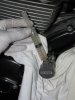
748 viewsOnce the clutch slave is bolted down (10 ft-lbs) pre-fill with DOT-4 brake fluid. I used a syringe and found 6cc to be enough to reach the bottom of the threads. Next, remove the banjo fitting from the stock unit and put it on the new one, torquing it down to 23 ft-lbs.Jan 30, 2011
|
|
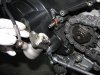
737 viewsThe stock clutch slave removed. Look at all that black crud! Give the area a good wipe down with a clean rag. Smear grease on the clutch push-rod if you wiped any off. I smeared white lithium grease on the mating surface of my Oberon, mimicking the stock application.Jan 30, 2011
|
|
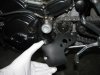
741 viewsRemove the sprocket cover, only two bolts attach it to the frame. All of the Allen head bolts being removed use the 5mm size. Next, use a 12mm wrench to break the banjo fitting free, then gently tighten it back a little bit to keep it from leaking. This will make it easier to remove it once the stock clutch slave is off the bike.Jan 30, 2011
|
|
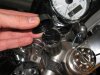
784 viewsPut a sheet of plastic wrap, like Saran-wrap, over the rubber plug...Jan 30, 2011
|
|
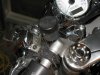
670 views...and screw the cap back on. This will help keep the DOT-4 fluid from flowing out when you remove the banjo fitting from the stock unit.Jan 30, 2011
|
|
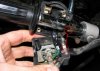
470 viewsWhen attaching the switch housing make sure to line up the housing pin to the hole in the handle bar.Jan 17, 2011
|
|
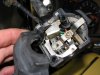
498 viewsThe complete assembly and all lubed up.Jan 17, 2011
|
|
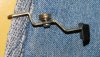
484 viewsIn case you drop the parts, here's how the bits go together. The washer goes on the screw and then the screw goes into the lever and the bushing. The flat side of the bushing faces the thumb pad.Jan 17, 2011
|
|
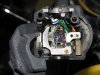
445 viewsThe retaining plate on top of the sliding switch assembly.Jan 17, 2011
|
|
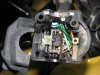
Turn signal switch500 viewsAll apart. Use white lithium on the left part of the switch, where the ball bearing rubs against the left wall. Use dielectric grease everywhere else.Jan 17, 2011
|
|
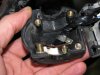
456 viewsHere's the high/low beam switch all buttoned up.Jan 17, 2011
|
|
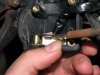
436 viewsWhen putting the female part of the switch onto the male part, make sure the sliding contact doesn't catch on the electrical pads on the female piece. Use a scribe or small, flat screwdriver blade to hold it down as you slide the female part on.Jan 17, 2011
|
|
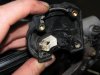
High/low beam switch466 viewsThe male part of the sliding switch for the high/low beam switch.Jan 17, 2011
|
|
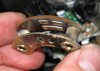
463 viewsThe female part of the sliding switch for the high/low beam switch. The long pad is the common power and the right pad is low beam, the left pad is high beam (as pictured here).Jan 17, 2011
|
|
440 viewsNotes: The instructions say to clean the area with brake cleaner and scuff the area. Because I'm using the TankSlapper to protect my tank I didn't do either but I did clean the area on the TankSlapper well.Jan 01, 2011
|
|
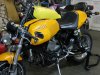
451 viewsHow it looks on the bike. Not as pretty as I had hoped but, man, does it work!Jan 01, 2011
|
|
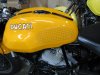
462 viewsHere's the StompGrip on the tank. The adhesive backing is 3M and it is sticky! So get everything lined up, triple checked, then peel the backing off. Place the StompGrip inbetween the marks and get it right the first time because the stuff is STICKY!Jan 01, 2011
|
|
| 3332 files on 167 page(s) |
 |
33 | |
|





