 Last additions Last additions |
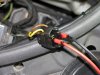
431 viewsThe bulb I originally had for the left side was bad so I got a replacement. This had the wires through it but no connector. Overall, it is better as there was no need for me to cut the wires, push them through the gasket, and butt-crimp them. For the connection, I pushed the spade connectors into the stock connector, dabbed liquid electrical "tape" around it to electrically insulate it as well as help hold the connectors, then wrapped the connector in electrical tape to further hold the connectors in. Not ideal at all but it works.Feb 06, 2010
|
|
400 viewsFeb 06, 2010
|
|
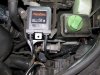
440 viewsLocation where I placed the left side electronics. Attached by using the supplied double-sided tape (strong stuff!).Feb 06, 2010
|
|
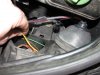
431 viewsGently pull on the brown and yellow wires to help keep the connector in its place when putting the rubber boot back on.Feb 06, 2010
|
|
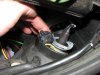
434 viewsWhatever plug you may have, simply push the connectors into the gap on the inward side of the light housing as this has a good gap to hold it out of the way.Feb 06, 2010
|
|
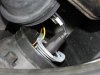
408 viewsThe original bulbs came with a plastic ring to help hold them in their shipping case. I split it and put it behind the bulb, then carefully pushed the bulb retaining tangs onto the plastic ring. This kept the tangs more even. Without them you'll need to push the tangs down a little bit as well as bend them inward in order to retain the bulb. I oriented the bulb just like the halogen it replaced, tab pointing up. No shadows were cast, full light is output.Feb 06, 2010
|
|
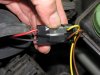
463 viewsThe plug wouldn't lock into the stock connector so I used a supplied zip-tie to bind it and electrical tape to keep it together. Notice that the RED wire mates with the YELLOW (+12 volts) bulb connector wire and the BLACK wire mates with the BROWN (ground) bulb connector wire.Feb 06, 2010
|
|
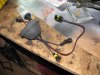
455 viewsAnother view of the completed assembly. Notice that the bulb is on the inside of the rubber boot and that the bulb is still in the container. You don't want to expose the bulb until you absolutely have to, it must stay clean! You can use rubbing alcohol to wipe the bulb down if it gets dirty or you touch it -- oil from your skin is bad for the bulb!Feb 06, 2010
|
|
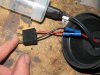
421 viewsBoth wires installed and ready to go.Feb 06, 2010
|
|
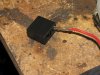
439 viewsMy kit came with holders that the wires clip into -- notice the orientation of the tang, it faces inside so it will lock in place.Feb 06, 2010
|
|
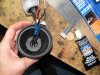
435 viewsViewing inside after applying the RTV.Feb 06, 2010
|
|
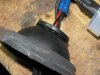
442 viewsWith the rubber cover turned inside-out, lift up the gasket and apply a continuous bead of silicone sealant a.k.a. RTV. This will insure a water-tight seal. Return the boot to its original state.Feb 06, 2010
|
|
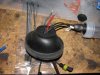
451 viewsHere's the rubber boot turned inside-out to get a better view of the inside of the gasket and the wires running through it.Feb 06, 2010
|
|
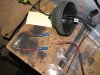
455 viewsFor the particular bulbs that came in this kit (an early version), I had to cut the wires and then feed them through the gasket. I used butt connectors and high-quality crimpers (expensive) to secure the wires.Feb 06, 2010
|
|
460 viewsThe interior.Feb 06, 2010
|
|
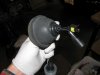
487 viewsSeat the wiring gasket as so...pretty dang obvious. How it should look.Feb 06, 2010
|
|
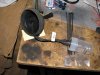
457 viewsFeed the harness through the rubber cup from the front side.Feb 06, 2010
|
|
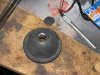
450 viewsTo hold the cover up while cutting, I used a 1/2" socket underneath. Use a very sharp Xacto blade and cut s-l-o-w-l-y and carefully.Feb 06, 2010
|
|
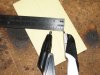
447 viewsTo make a nice 7/8" circle use a compass and set it to 7/16" (about 11mm).Feb 06, 2010
|
|
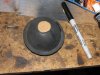
Through the rubber cover440 viewsThe following is the method I used on the left side after trying the right side by using the hard cover (described after this procedure). This is SO much easier to install and route wires, however, you MUST make sure you seal the gasket to the rubber boot so as to keep water out. I personally think this is the best way to do it with the kit I used.
I used a scrap piece of cardboard, cut in a 7/8" diameter circle, and traced the back side of the low beam rubber cover using a permanent marker.Feb 06, 2010
|
|
| 3332 files on 167 page(s) |
 |
44 | |
|





